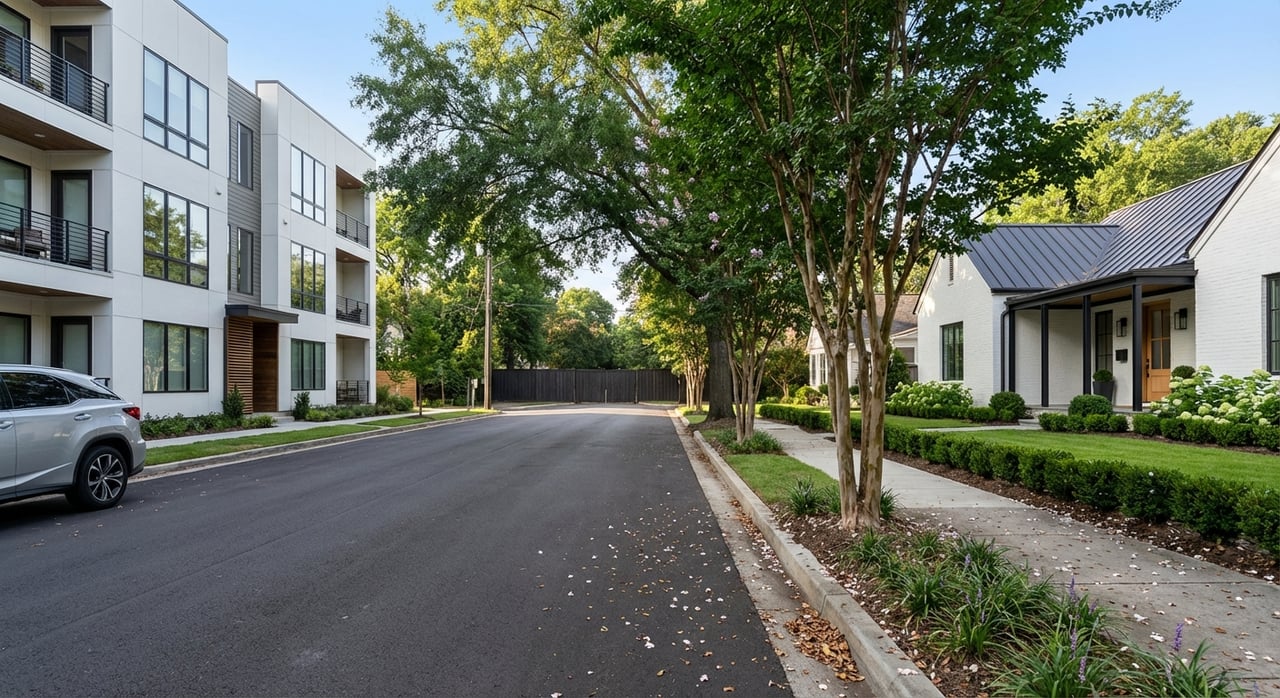
Should you lean into Uptown’s energy or the calm of a tree‑lined suburb? In Charlotte, both paths have real advantages. As of December 31, 2025, the typical Charlotte home value was about $390,000 according to Zillow, and Redfin reported a median sale price near $400,000 in January 2026. The city’s mean one‑way commute is about 24.7 minutes based on the latest Census QuickFacts. Work‑from‑home patterns also changed the daily routine for many households, which can shift what “best fit” looks like.
In this guide, you’ll compare urban and suburban living across housing, commute, costs, lifestyle, schools, and safety. You’ll also get a practical checklist so you can decide with confidence. Let’s dive in.
Urban living in Charlotte
Housing types and pricing signals
In the urban core, you’ll find high‑rise condos, mid‑rise apartments, loft conversions, and rows of townhomes. These homes often have smaller footprints with shared amenities like gyms and concierge services. They can trade at higher prices per square foot and include monthly HOA fees. If you value turn‑key living with less yard work, this setting fits well.
Commute and transit access
If you work in or near Uptown, living close can shorten your door‑to‑desk time. The citywide mean commute is about 24.7 minutes according to Census QuickFacts, and many central ZIP codes trend below that. The CATS network, which includes the Blue Line light rail, CityLYNX Gold Line streetcar, and bus routes, serves core corridors best; you can review an overview on the Charlotte page. Post‑pandemic, more residents report working from home, which can make urban transit and walkability even more practical for errands and meetings, as covered by WFAE’s commute analysis.
Walkability, parks, and daily rhythm
Several core neighborhoods score well for walkability on Walk Score’s Charlotte pages. Fourth Ward, First Ward, and South End connect you to dining, events, and cultural venues on foot. You can also reach green spaces like the Rail Trail, Little Sugar Creek Greenway, or Freedom Park with a short ride or walk from many close‑in areas. Expect a lively scene, evening activity near entertainment hubs, and easier access to concerts and sports.
Suburban living around Charlotte
Housing types and pricing drivers
Suburban areas such as SouthPark, Ballantyne, Matthews, Huntersville, and Cornelius lean toward single‑family homes with larger interior space and private yards. You will also see townhomes and garden‑style condos near shopping and dining. Prices in these areas reflect lot size, school assignments, and commute access to major corridors. If you want room to spread out and space for vehicles, this path aligns with your goals.
Commute patterns and parking
Most suburban households rely on one or more cars. Your commute may be longer but often follows predictable highway routes. If you work from home several days per week, the drive time tradeoff can feel minor, a trend supported by WFAE’s reporting on changing commutes. You’ll usually have attached garages, easy guest parking, and straightforward loading for groceries and gear.
Lifestyle, green space, and lakes
Suburbs trade walkable nightlife for quieter streets and more private outdoor space. Many neighborhoods are near regional parks and greenways, and the lake‑area towns add water access and recreational options. Weekly routines often center on home, school activities, local shopping centers, and community amenities like clubhouses, pools, and tennis.
Cost and carrying‑cost checklist
Before you decide, compare the full monthly picture. Here is a simple lens to use:
- Mortgage and property taxes. Run several rate scenarios to test your comfort zone.
- HOA or POA fees. Condos and many townhomes have HOA dues. Master‑planned suburban communities often have POA or HOA fees for amenities.
- Insurance. Condos typically require an HO‑6 policy, while single‑family homes use an HO‑3 policy. Costs vary by location and structure.
- Parking. Urban buildings may charge for reserved spaces or have limited guest parking. Ask if a space is deeded or assigned.
- Utilities and upkeep. Urban buyers trade yard work for HOA‑covered maintenance. Suburban buyers take on landscaping, exterior care, and sometimes higher utility loads in larger homes.
Citywide pricing context helps. As of December 31, 2025, Zillow reported a typical Charlotte home value near $390,000, while Redfin’s January 2026 median sale price was about $400,000. Neighborhoods vary widely around those anchors, so check current MLS data when you target a short list.
Schools, safety, and due diligence
For most city addresses, Charlotte–Mecklenburg Schools (CMS) manages school assignments. Always verify exact school boundaries and performance using CMS resources. Assignments can change and may affect your daily routine and long‑term resale.
On safety, use official CMPD data for objective insight. City reports show period‑by‑period changes, and hotspots can be block specific. Review recent trends and maps through the CMPD crime statistics portal, then pair that with a daytime and evening visit to the street you are considering.
Where new homes are coming online
Large mixed‑use projects continue to reshape the core. The Queensbridge Collective in South End and Uptown is an example of high‑rise development that adds residential and retail, which can change walkability and the neighborhood mix over time. You can follow project milestones via Riverside Investment’s update.
Inventory has improved compared with the tightest months of the last cycle. Local reporting in late 2024 highlighted more homes coming to market as rates shifted, which can influence negotiation power for buyers and sellers. See the coverage on supply balance in Axios Charlotte’s market brief, then confirm months of supply in your target ZIP code.
Quick decision framework
Use these signals to clarify your fit, then verify with local data.
If you lean urban
- You want walking access to dining, events, and the office.
- You prefer a smaller footprint with building amenities over yard work.
- You can leverage CATS options and shorter ride‑share trips for nights out.
- You are comfortable with HOA rules, pet policies, and structured parking.
What to verify next:
- Recent condo and townhome comps in your target building and block.
- HOA fees, reserve posture, and any upcoming assessments.
- Assigned parking details and guest parking rules.
- Walkability and transit convenience on Walk Score.
- CMPD crime statistics for the specific area you are considering via the CMPD portal.
If you lean suburban
- You value interior space, a private yard, and room for vehicles.
- You prefer quieter streets and community amenities over nightlife.
- Your schedule supports highway commutes or you work from home part time.
- You want to explore school options within CMS or nearby county districts.
What to verify next:
- Neighborhood median sold prices and time on market from current MLS data.
- HOA or POA fees, amenity access, and covenants for the community.
- Peak‑hour drive times to work, schools, and key errands.
- School assignment and program details through CMS tools.
Your next step
Choosing between urban and suburban living in Charlotte is easier when you frame the decision around your daily life, commute rhythms, full monthly costs, and long‑term plans. If you want a calm, expert process from search to closing, our team is ready to guide you through data, tours, and negotiations with care.
Schedule a White‑Glove Consultation with Kendra Conyers to compare neighborhoods, refine your budget, and move forward with confidence.
FAQs
What is the average commute time in Charlotte today?
- The city’s mean one‑way commute is about 24.7 minutes based on the latest Census QuickFacts data.
How much do homes cost in Charlotte in 2025–2026?
- Zillow’s typical home value was about $390,000 as of December 31, 2025, and Redfin’s January 2026 median sale price was around $400,000, with wide variation by neighborhood.
Which Charlotte neighborhoods are most walkable?
- Several core areas such as Fourth Ward, First Ward, and South End rate highly on Walk Score’s Charlotte pages for walkability and transit access.
What should I check before buying a condo in Uptown or South End?
- Review HOA fees and rules, parking assignment and guest policies, nearby transit on Walk Score, and recent trends for the exact block on the CMPD statistics portal.
How do schools factor into a suburban purchase around Charlotte?
- Verify current school assignments, programs, and dates directly with Charlotte–Mecklenburg Schools because lines and offerings can change.
Is public transit useful if I live in the urban core?
- Many central neighborhoods benefit from the Blue Line, Gold Line, and bus routes within the CATS network, which you can explore via the Charlotte overview page.
Are new developments changing urban walkability?
- Large mixed‑use projects such as Queensbridge Collective add residential and retail that can improve walkability and amenities, as noted in Riverside Investment’s update.
Has housing inventory improved for buyers in Charlotte?
- Late‑2024 local reporting signaled improving supply as mortgage dynamics shifted, which you can review in Axios Charlotte’s brief before checking current MLS data for your ZIP code.